Buy belgaweb.be ?
We are moving the project
belgaweb.be .
Are you interested in purchasing the domain
belgaweb.be ?
domain@kv-gmbh.de · 0541-91531010
Buy belgaweb.be ?
What is the wave-particle duality?
Wave-particle duality is a fundamental concept in quantum mechanics that states that particles, such as electrons and photons, can exhibit both wave-like and particle-like behavior. This means that they can behave as waves, with characteristics such as interference and diffraction, and also as particles, with characteristics such as position and momentum. This duality challenges our classical understanding of particles and waves as distinct entities, and is a key aspect of understanding the behavior of matter and energy at the quantum level. **
Does the human have particle and wave characteristics?
Yes, humans and all matter have both particle and wave characteristics. This is known as wave-particle duality, a fundamental concept in quantum mechanics. At the quantum level, particles such as electrons and photons can exhibit wave-like behavior, as demonstrated by phenomena like diffraction and interference. This duality is a key aspect of the behavior of matter and energy at the smallest scales of the universe. **

Similar search terms for Wave-particle
Top-Angebote
Products related to Wave-particle:
-
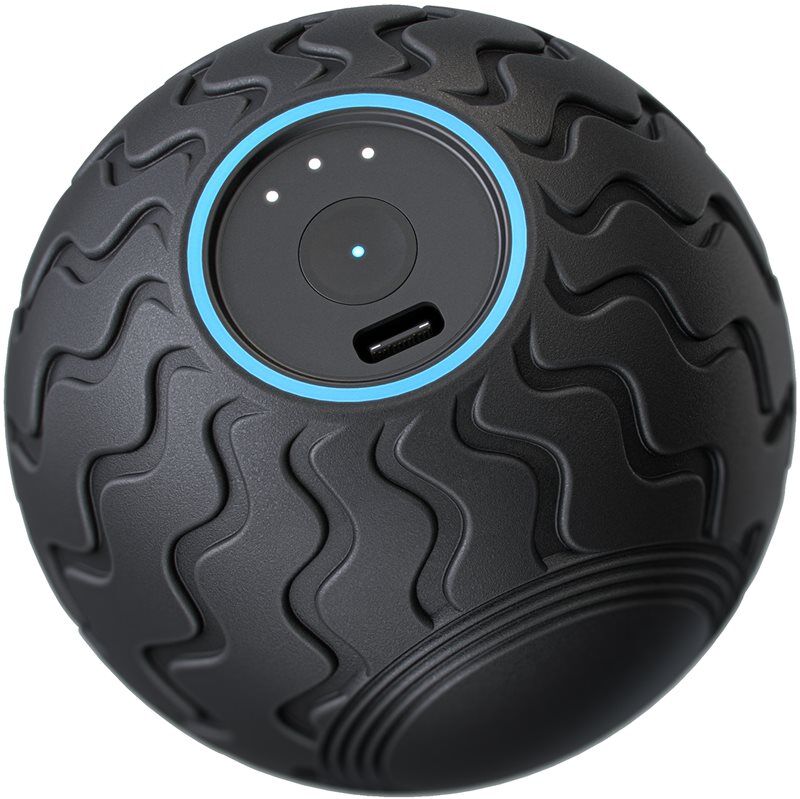
Therabody Wave Roller accessoire de massage 1 pcsTherabody Wave Roller, 1 pcs, Accessoires de massage pour homme, Après une activité physique intense, le corps et surtout les muscles ont besoin de se détendre et de se régénérer. Le dispositif de massage Therabody Wave Roller aide à réduire les tensions musculaires et à décontracter les muscles raides. Le produit : décontracte les muscles raides150,00 €*Shipping: 3,45 €Secure redirect to the provider
-
Therabody Wave Duo appareil de massage 1 pcsTherabody Wave Duo, 1 pcs, Accessoires de massage pour homme, Après une activité physique intense, le corps et surtout les muscles ont besoin de se détendre et de se régénérer. Le dispositif de massage Therabody Wave Duo aide à réduire les tensions musculaires et à décontracter les muscles raides. Le produit : décontracte les muscles raides110,00 €*Shipping: 3,45 €Secure redirect to the provider
-
Therabody Wave Solo appareil de massage 1 pcsTherabody Wave Solo, 1 pcs, Accessoires de massage pour homme, Après une activité physique intense, le corps et surtout les muscles ont besoin de se détendre et de se régénérer. Le dispositif de massage Therabody Wave Solo aide à réduire les tensions musculaires et à décontracter les muscles raides. Le produit : décontracte les muscles raides peut être utilisé sur toutes les parties du corps90,00 €*Shipping: 3,45 €Secure redirect to the provider
-
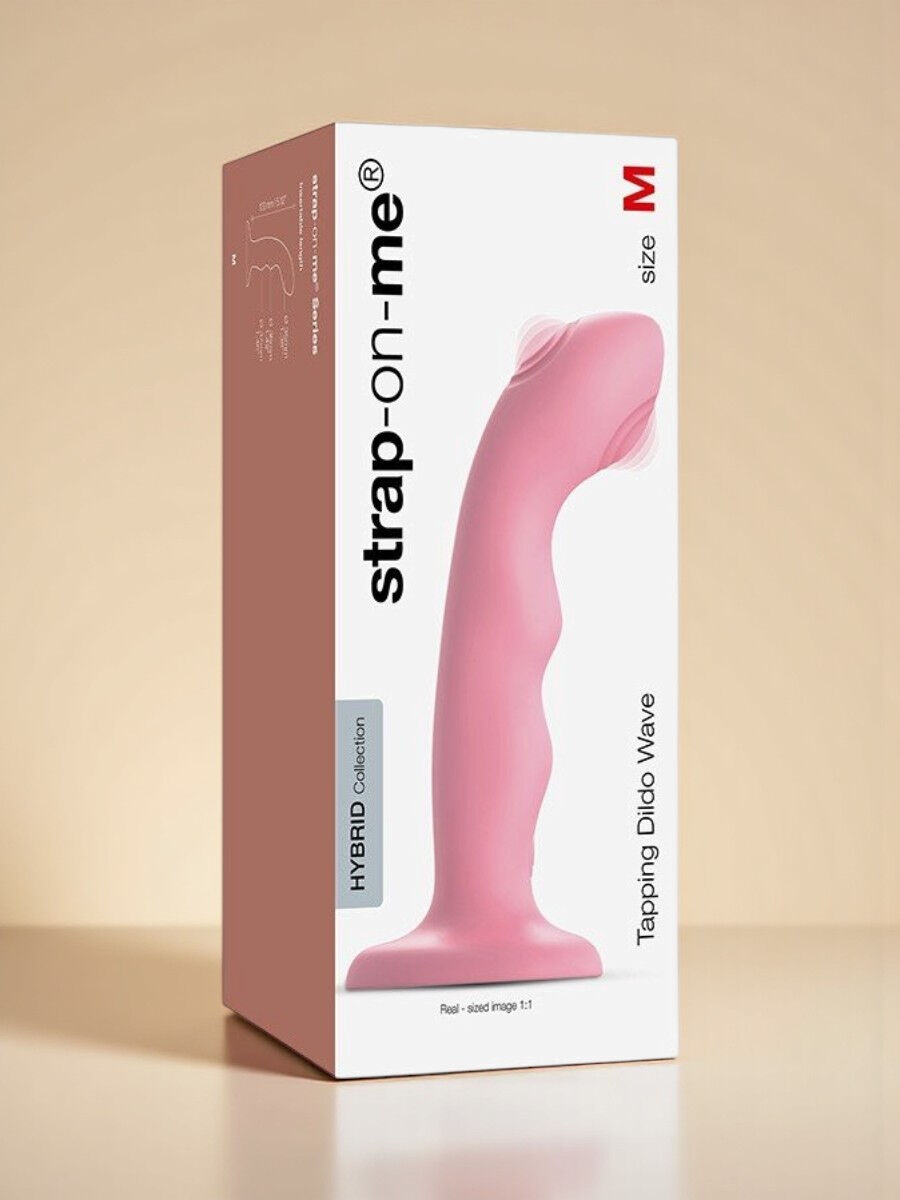
Strap-On-Me Tapping Dildo Wave Rose CorailFaites glisser vos doigts sur le Tapping Dildo Wave Rose Corail et laissez la curiosité prendre le dessus. C’est doux, intriguant, presque hypnotique. Le design attire l’œil, la forme promet de belles découvertes. Et soudain, tout devient plus clair : ce jouet signé Strap-On-Me n’a rien89,90 €*Shipping: 0,00 €Secure redirect to the provider


-
Do all quantum objects obey the wave-particle duality?
Yes, all quantum objects exhibit wave-particle duality, which means they can exhibit both wave-like and particle-like behavior. This duality is a fundamental aspect of quantum mechanics and is observed in phenomena such as the double-slit experiment, where particles exhibit interference patterns characteristic of waves. This duality is a key feature of quantum theory and is essential for understanding the behavior of quantum objects. **
-
What is the difference between the wave model and the particle model?
The wave model describes light as a wave that travels through space, exhibiting properties like interference and diffraction. In contrast, the particle model views light as a stream of particles called photons that carry energy and momentum. The wave model explains phenomena like interference patterns and polarization, while the particle model helps to understand effects like the photoelectric effect and Compton scattering. Both models are used in different contexts to describe the behavior of light. **
-
In which year and with which experiment was the wave-particle duality proven?
The wave-particle duality was proven in 1927 through the famous double-slit experiment conducted by physicist Thomas Young. This experiment demonstrated that light exhibits both wave-like and particle-like properties, leading to the development of the concept of wave-particle duality in quantum mechanics. **
-
What is the difference between the wave and the particle model of light?
The wave model of light describes light as a continuous wave with properties such as wavelength, frequency, and amplitude. This model explains phenomena such as interference and diffraction. On the other hand, the particle model of light, also known as the photon model, describes light as a stream of discrete particles called photons. This model explains phenomena such as the photoelectric effect and the emission of light from atoms. The wave model is more suitable for explaining the behavior of light in certain situations, while the particle model is more suitable for explaining other phenomena. **


How can one imagine a photon within the framework of wave-particle duality?
Within the framework of wave-particle duality, a photon can be imagined as both a wave and a particle simultaneously. As a wave, it exhibits properties such as interference and diffraction, similar to other waves. As a particle, it carries discrete packets of energy and momentum, and can interact with matter as a discrete entity. This duality means that a photon's behavior is best described by both wave and particle characteristics, and it can exhibit wave-like behavior in some situations and particle-like behavior in others. This dual nature of a photon is a fundamental aspect of quantum mechanics. **
Light is neither a particle nor a wave, but depending on the experiment it exhibits properties of either a wave or a particle. But what it really is, we do not know.
Light is a complex phenomenon that exhibits both wave-like and particle-like properties. In some experiments, it behaves like a wave, showing interference and diffraction patterns, while in others, it behaves like a particle, interacting with matter in discrete packets of energy called photons. The true nature of light remains a mystery, and it is described by the wave-particle duality principle in quantum mechanics. **
Top-Angebote
Products related to Wave-particle:
-
SO'HOME Voilage à galon fronceur et wave, LIMPOIdéal pour filtrer la lumière, le voilage Limpo crée une ambiance douce et cosy.Léger et aérien, le polyester tamise la lumière extérieure. Facile à vivre, il ne se froisse pas. 2 fixations possibles : galon fronceur ou finition wave. Le galon fronceur crée des plis selon l’espacement que vous souhaitez. Plusieurs niveaux de crochets (vendus séparément sur le site) laissent le choix de la hauteur pour laisser apparente ou non la tringle à rideaux. La finition wave ou vague apporte des ondulations régulières et élégantes aux rideaux. Ses plis uniformes offrent un rendu soigné, contemporain et épuré. Commandez le rail adapté à votre choix de fixation séparément. Description • 100% polyester • Finition du haut : galon fronceur (vendu avec crochets de fixation) ou finition waze (vague) • Finition du bas : ourlet simple Pour vous aider dans le choix et l’entretien de vos rideaux, n’hésitez pas à consulter notre guide en tapant « GUIDE RIDEAUX » dans notre moteur de recherche sur le site. Entretien • Lavable en machine à 40° • Ne pas sécher en tambour • S'il n'est pas nécessaire de les repasser (rideau en lin, voilage...), laissez sécher les rideaux à l'air libre en les suspendant immédiatement après le lavage, en veillant à bien les étendre sur toute leur largeur. • Si vous souhaitez repasser vos rideaux, nous vous conseillons d'utiliser un fer à vapeur à faible température ou un défroisseur. Dimensions • Largeur 140 x hauteur 180 cm • Largeur 140 x hauteur 240 cm • Largeur 140 x hauteur 350 cm • OEKO-TEX® Standard 100. La labellisation OEKO-TEX® Standard 100 contrôle les substances nocives des produits textiles via un label indépendant et international. Fiche produit relative aux qualités et caractéristiques environnementales • Origine de fabrication (tissage, teinture, confection) : Chine • Rejette des microfibres plastiques dans l'environnement lors du lavage.9,99 €*Shipping: 3,99 €Secure redirect to the provider
-
Therabody Wave Roller accessoire de massage 1 pcsTherabody Wave Roller, 1 pcs, Accessoires de massage pour homme, Après une activité physique intense, le corps et surtout les muscles ont besoin de se détendre et de se régénérer. Le dispositif de massage Therabody Wave Roller aide à réduire les tensions musculaires et à décontracter les muscles raides. Le produit : décontracte les muscles raides150,00 €*Shipping: 3,45 €Secure redirect to the provider
-
Therabody Wave Duo appareil de massage 1 pcsTherabody Wave Duo, 1 pcs, Accessoires de massage pour homme, Après une activité physique intense, le corps et surtout les muscles ont besoin de se détendre et de se régénérer. Le dispositif de massage Therabody Wave Duo aide à réduire les tensions musculaires et à décontracter les muscles raides. Le produit : décontracte les muscles raides110,00 €*Shipping: 3,45 €Secure redirect to the provider
-
What is the wave-particle duality?
Wave-particle duality is a fundamental concept in quantum mechanics that states that particles, such as electrons and photons, can exhibit both wave-like and particle-like behavior. This means that they can behave as waves, with characteristics such as interference and diffraction, and also as particles, with characteristics such as position and momentum. This duality challenges our classical understanding of particles and waves as distinct entities, and is a key aspect of understanding the behavior of matter and energy at the quantum level. **
-
Does the human have particle and wave characteristics?
Yes, humans and all matter have both particle and wave characteristics. This is known as wave-particle duality, a fundamental concept in quantum mechanics. At the quantum level, particles such as electrons and photons can exhibit wave-like behavior, as demonstrated by phenomena like diffraction and interference. This duality is a key aspect of the behavior of matter and energy at the smallest scales of the universe. **
-
Do all quantum objects obey the wave-particle duality?
Yes, all quantum objects exhibit wave-particle duality, which means they can exhibit both wave-like and particle-like behavior. This duality is a fundamental aspect of quantum mechanics and is observed in phenomena such as the double-slit experiment, where particles exhibit interference patterns characteristic of waves. This duality is a key feature of quantum theory and is essential for understanding the behavior of quantum objects. **
-
What is the difference between the wave model and the particle model?
The wave model describes light as a wave that travels through space, exhibiting properties like interference and diffraction. In contrast, the particle model views light as a stream of particles called photons that carry energy and momentum. The wave model explains phenomena like interference patterns and polarization, while the particle model helps to understand effects like the photoelectric effect and Compton scattering. Both models are used in different contexts to describe the behavior of light. **
Similar search terms for Wave-particle
-
Therabody Wave Solo appareil de massage 1 pcsTherabody Wave Solo, 1 pcs, Accessoires de massage pour homme, Après une activité physique intense, le corps et surtout les muscles ont besoin de se détendre et de se régénérer. Le dispositif de massage Therabody Wave Solo aide à réduire les tensions musculaires et à décontracter les muscles raides. Le produit : décontracte les muscles raides peut être utilisé sur toutes les parties du corps90,00 €*Shipping: 3,45 €Secure redirect to the provider
-
Strap-On-Me Tapping Dildo Wave Rose CorailFaites glisser vos doigts sur le Tapping Dildo Wave Rose Corail et laissez la curiosité prendre le dessus. C’est doux, intriguant, presque hypnotique. Le design attire l’œil, la forme promet de belles découvertes. Et soudain, tout devient plus clair : ce jouet signé Strap-On-Me n’a rien89,90 €*Shipping: 0,00 €Secure redirect to the provider
-
Beauty Formulas Wave Action brosses à dents 3 pcsBeauty Formulas Wave Action, 3 pcs, Brosses à dents pour femme, La brosse à dents Beauty Formulas Wave Action maintient la santé et la beauté de vos dents. Elle élimine efficacement la plaque dentaire et aide dans la prévention des caries dentaires. Le produit : élimine la plaque dentaire polit la surface des dents facile à utiliser Mode d’emploi : Appliquez sur la brosse à dents, humidifiez, brossez vos dents et la cavité buccale.2,61 €*Shipping: 3,45 €Secure redirect to the provider
-
Hollister Wave Eau de Parfum pour femme 100 mlHollister Wave, 100 ml, Eaux de Parfum pour femme, Laissez-vous imprégner par un parfum qui vous mettra de bonne humeur tout au long de la journée. L’eau de parfum pour femme Hollister Wave reflète l’optimisme et le bonheur à l’état pur. parfum floral parfum fruité le choix idéal pour les femmes libres d’esprit parfum frais, idéal lorsqu’il fait chaud22,13 €*Shipping: 3,45 €Secure redirect to the provider
-
In which year and with which experiment was the wave-particle duality proven?
The wave-particle duality was proven in 1927 through the famous double-slit experiment conducted by physicist Thomas Young. This experiment demonstrated that light exhibits both wave-like and particle-like properties, leading to the development of the concept of wave-particle duality in quantum mechanics. **
-
What is the difference between the wave and the particle model of light?
The wave model of light describes light as a continuous wave with properties such as wavelength, frequency, and amplitude. This model explains phenomena such as interference and diffraction. On the other hand, the particle model of light, also known as the photon model, describes light as a stream of discrete particles called photons. This model explains phenomena such as the photoelectric effect and the emission of light from atoms. The wave model is more suitable for explaining the behavior of light in certain situations, while the particle model is more suitable for explaining other phenomena. **
-
How can one imagine a photon within the framework of wave-particle duality?
Within the framework of wave-particle duality, a photon can be imagined as both a wave and a particle simultaneously. As a wave, it exhibits properties such as interference and diffraction, similar to other waves. As a particle, it carries discrete packets of energy and momentum, and can interact with matter as a discrete entity. This duality means that a photon's behavior is best described by both wave and particle characteristics, and it can exhibit wave-like behavior in some situations and particle-like behavior in others. This dual nature of a photon is a fundamental aspect of quantum mechanics. **
-
Light is neither a particle nor a wave, but depending on the experiment it exhibits properties of either a wave or a particle. But what it really is, we do not know.
Light is a complex phenomenon that exhibits both wave-like and particle-like properties. In some experiments, it behaves like a wave, showing interference and diffraction patterns, while in others, it behaves like a particle, interacting with matter in discrete packets of energy called photons. The true nature of light remains a mystery, and it is described by the wave-particle duality principle in quantum mechanics. **
* All prices are inclusive of VAT and, if applicable, plus shipping costs. The offer information is based on the details provided by the respective shop and is updated through automated processes. Real-time updates do not occur, so deviations can occur in individual cases. ** Note: Parts of this content were created by AI.